
Industrial production contracted by 1.9 per cent in November, entering the negative territory after a two-month gap, mainly due to poor showing by manufacturing and mining sectors, official data showed on Tuesday. The manufacturing sector -- which constitutes 77.63 per cent of the index of industrial production (IIP) -- recorded a contraction of 1.7 per cent in November 2020, as per data released by the National Statistical Office (NSO). Mining sector output too witnessed a decline, shrinking 7.3 per cent.

Top performers were PowerGrid, ONGC, Ultratech Cement, Asian Paint, Kotak Bank and Titan. Nifty settled with a gain of 232.40 points at 14,761.55.

Andhra Pradesh posted 8.14% consumer inflation in October.

Unemployment rate rose to 13.3 per cent in July-September 2020 as compared to 8.4 per cent in the year-ago period, according to a periodic labour force survey by the National Statistical Office (NSO). Joblessness or unemployment rate (UR) is defined as the percentage of unemployed persons in the labour force. The UR was 20.9 per cent in April-June 2020, the eighth Periodic Labour Force Survey (PLFS) showed.

At a time when the government is nudging the private sector to ramp up its capital expenditure (capex), the Ministry of Statistics and Programme Implementation (MoSPI) is poised to kick-start the first-of-its-kind annual survey on the status of private sector capex from next month. "The inaugural edition of the annual exercise will start in October and will be completed by December. "The results will be made public by February next year," said Geeta Singh Rathore, director general, National Sample Survey Office (NSSO), at a data users' conference on Thursday.

The government's decision to release the reports comes two days after over 200 scholars from across the globe issued a statement demanding release of all withheld reports produced by the NSO, including the household consumer expenditure survey that was junked.

Industrial production growth entered positive territory after a gap of two months with a record 22.4 per cent rise in March this year, mainly due to the low-base effect and good show by manufacturing, mining and power sectors. The manufacturing sector -- which constitutes 77.63 per cent of the index of industrial production (IIP) -- grew by 25.8 per cent in March 2021, as per the data released by the National Statistical Office (NSO) on Wednesday. The mining sector output too grew 6.1 per cent in March, while power generation increased by 22.5 per cent.

Retail inflation dropped marginally to 7.01 per cent in June mainly due to slight easing in prices of vegetables and pulses, though it still remained above the Reserve Bank's comfort level for the sixth month in a row. The consumer price index (CPI) based inflation stood at 7.04 per cent in the preceding month of May and 6.26 per cent in June 2021. Inflation in the food basket in June 2022 was 7.75 per cent, compared to 7.97 per cent in the previous month, as per the National Statistical Office (NSO) data released on Tuesday.

Retail inflation remained above the RBI's comfort level for the second consecutive month despite slipping slightly to 6.26 per cent in June while the factory output recorded a growth of 29.3 per cent in May, mainly on account of the base effect, the government data showed. The marginal slippage in the Consumer Price Index (CPI)-based inflation was noticed despite little firmness witnessed in the food inflation which inched up to 5.15 per cent in June from 5.01 per cent a month ago. Retail inflation based on Consumer Price Index (CPI) was 6.3 per cent in May 2021 and 6.23 per cent in June 2020.

Questions will be raised over why those changes take place and whether non-economic factors are at play, says A K Bhattacharya.

India's economy grew by 6.3 per cent in the second quarter of the current fiscal, official data released on Wednesday showed.

Retail inflation eased to 7.04 per cent in May, mainly on account of softening food and fuel prices as the government as well as the RBI stepped in to control spiralling price rise by way of duty cuts and repo rate hike. However, the inflation print stayed above the Reserve Bank's upper tolerance level of 6 per cent for the fifth month in a row. The Consumer Price Index (CPI) based retail inflation was 7.79 per cent in April.

The Russia-Ukraine conflict, which has spooked financial markets globally, will set the tone for Dalal Street this week amid concerns over energy prices and foreign fund outflows, analysts said. Participants will also track key macroeconomic signals like GDP estimates and PMI data for manufacturing and services sectors to be announced this week, they added. "With earnings season behind us and given the overall sentiments, markets are expected to move in sync with global peers in the coming week. "A close eye will be kept on the developments concerning the Russia - Ukraine crisis and considering the inflation overhang, market participants will also observe movements in energy prices," said Shrikant Chouhan, Head of Equity Research (Retail), Kotak Securities Ltd.

India's economy grew by 13.5 per cent in the first quarter of the current fiscal, mainly due to the base effect, official data showed on Wednesday. The gross domestic product (GDP) had expanded by 20.1 per cent in the corresponding April-June period of 2021-22, according to data released by the National Statistical Office (NSO). Many analysts had projected the Indian economy will expand at a double-digit growth rate due to the base effect.

Bond markets, global as well as domestic, are likely headed towards hard times over the next three to six months, as higher vegetable prices, rising fuel costs, and improved wages may keep inflation hot, believe analysts, who expect the yields to hit 7.5 per cent in the near-term from the current 7.234 per cent. In this backdrop, they suggest investors can put in money in funds/instruments with residual maturity of 4 to 6 years, while longer-term investors can allocate cautiously to the longer end in the range beyond 7 years.
Retail inflation softened to 6.71 per cent in July due to moderation in food prices but remained above the Reserve Bank's comfort level of 6 per cent for the seventh consecutive month. With retail inflation continuing to remain high despite a fall in prices of vegetables and edible oils, among other commodities in July, the Reserve Bank of India (RBI) might go for another rate hike in September. The Consumer Price Index (CPI) based retail inflation was at 7.01 per cent in June and 5.59 per cent in July 2021. It was above 7 per cent from April to June this fiscal.

Gross enrolments of new subscribers with ESIC were 1.49 crore during the entire financial year 2018-19.

The World Bank has retained India's economic growth forecast for the current fiscal at 8.3 per cent as the recovery is yet to become broad-based. As per the first advanced estimates of the national income released by the National Statistical Office (NSO) last week, the economy is projected to grow at 9.2 per cent in 2021-22, surpassing pre-COVID level in actual terms, mainly on account of improved performance, especially in farm, mining and manufacturing sectors. "India's economy is expected to expand by 8.3 per cent in fiscal year 2021/22 (ending March 2022), unchanged from last June's forecast as the recovery is yet to become broad-based.

The Supreme Court of India has directed all high courts, state governments, and union territories to ensure the availability of separate toilet facilities for men, women, persons with disabilities (PwDs), and transgender persons in all court premises and tribunals across the country. The court stressed the importance of public health and the right to privacy, stating that adequate public toilets protect women and transgender persons. The court also expressed concern about the condition of public toilets near toll plazas on national highways and emphasized the need for proper sanitation facilities in court premises for judges, advocates, litigants, and staff members. This decision highlights the importance of access to basic amenities in ensuring a fair and dignified justice system.
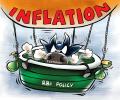
The RBI, which mainly factors in CPI for arriving at its bi-monthly monetary policy, has been mandated by the government to ensure that inflation remains at 4 per cent, with deviation of 2 per cent on either side.

The country's demographic dividend is dissipating, with seriously adverse consequences for young India, asserts Shankar Acharya, former Chief Economic Adviser to the Government of India.

Now that the economy is growing at a higher-than-expected rate, it is time to accelerate the pace of fiscal consolidation, and the Budget could be a good starting point, argues Rajesh Kumar.

As a percentage contributor to nominal GDP, PFCE's share was 60.1 per cent in FY23, compared with 59.6 per cent and 60.8 per cent in the two preceding fiscal years. "Although PFCE is expected to grow 7.7 per cent in FY23, we believe it is still short of a broad-based recovery. "The current consumption demand is highly skewed in favour of goods and services consumed largely by the households falling in the upper income bracket. "A broad-based consumption recovery, therefore, is still some distance away," said Sunil Kumar Sinha, principal economist with India Ratings.

India recorded economic growth of 7.8 per cent in the April-June quarter of 2023-24 against 13.1 per cent in the year-ago period, as per the National Statistical Office (NSO) data released on Thursday. India remains the fastest-growing major economy as China's GDP growth in the April-June quarter was 6.3 per cent.

Ayush refers to the six Indian systems of medicines, namely Ayurveda, Yoga and Naturopathy, Unani, Siddha, Sowa-Rigpa and Homeopathy are majorly prevalent in the country.

Enthused by higher than expected GDP numbers in the fourth quarter of 2022-23, Chief Economic Adviser (CEA) V Anantha Nageswaran on Wednesday said India's economic growth may exceed the initial estimate of 6.5 per cent in the current fiscal and the country can look for another year of solid economic performance.

Industrial production surged by 13.6 per cent in June mainly due to a low-base effect and good performance by manufacturing, mining and power sectors but the output remained below the pre-pandemic level. The manufacturing sector, which constitutes 77.63 per cent of the Index of Industrial Production (IIP), grew by 13 per cent in June this year, according to the data released by the National Statistical Office (NSO) on Thursday. The mining sector output rose by 23.1 per cent in June while power generation increased by 8.3 per cent.

India's economic growth slowed to 8.4 per cent in the second quarter of 2021-22, mainly due to waning low base effect, official data showed on Tuesday. The GDP growth in April-June quarter this fiscal stood at 20.1 per cent. The Indian economy had contracted by 24.4 per cent in April-June last year.
Unemployment rate for persons of age 15 years and above in urban areas dipped to 12.6 per cent in April-June 2021 from 20.8 per cent in the same month of the previous year, showed a periodic labour force survey by the National Statistical Office (NSO). Joblessness or unemployment rate (UR) is defined as the percentage of unemployed persons in the labour force. The joblessness was high in April-June in 2020 mainly due to the impact of lockdown restrictions in the country which were imposed to curb the spread of deadly coronavirus.

During the month, inflation in vegetables shot up to 35.99 per cent, as against 26.10 per cent in October. Likewise, the prices of cereals and eggs grew at a faster pace of 3.71 per cent.

Sounding a note of caution, former Reserve Bank Governor Raghuram Rajan has said that India is "dangerously close" to the Hindu rate of growth in view of subdued private sector investment, high interest rates and slowing global growth. Rajan said that sequential slowdown in the quarterly growth, as revealed by the latest estimate of national income released by the National Statistical Office (NSO) last month, was worrying. Hindu rate of growth is a term describing low Indian economic growth rates from the 1950s to the 1980s, which averaged around 4 per cent.

The number of people living in England and Wales identifying as Christian has fallen below half the population for the first time, while those identifying as Muslim or Hindu have registered a small rise, according to the latest census figures released on Tuesday.

India's industrial production growth slowed down for a fourth straight month in December to 0.4 per cent mainly due to a poor performance by the manufacturing sector. The manufacturing sector, which constitutes 77.63 per cent of the Index of Industrial Production (IIP), contracted by 0.1 per cent in December, according to the data released by the National Statistical Office (NSO) on Friday. In December 2021, the mining output rose by 2.6 per cent, and power generation increased by 2.8 per cent.
The government has held back the release of complete data of the Index of Industrial Production (IIP) for April, as was done for the same month last year due to the COVID-19 lockdown. Last year in June, the National Statistical Office (NSO) had held back the release of complete IIP data due to the effect of the nationwide lockdown on factory output. This year too industrial production was hit due to lockdown restrictions imposed by states to curb the second wave of the pandemic.

The unemployment rate for persons of 15 years and above in urban areas slipped to 8.7 per cent in October-December 2021 from 10.3 per cent in the year-ago quarter, showed a periodic labour force survey by the National Statistical Office (NSO). Joblessness or unemployment rate (UR) is defined as the percentage of unemployed persons in the labour force. Joblessness was high in October-December in 2020 mainly due to the staggering impact of the lockdown restrictions in the country, which were imposed to curb the spread of the deadly coronavirus.

Lead indicators suggest that domestic current account deficit (CAD) is likely to reduce in 2023, while macro-economic stability has received a boost from inflation being brought back to the official tolerance band, according to the Reserve Bank of India's (RBI's) January 2023 Bulletin. "With the merchandise trade deficit reaching an all-time high of $83.5 billion in a quarter, and a rise in net outgo from the income account, the current account deficit increased to 4.4 per cent of GDP in Q2FY23," the State of the Economy article in the bulletin said. "It is noteworthy, however, that the CAD for Q1 was revised down from 2.8 per cent to 2.2 per cent on account of downward adjustment in Customs data.

Industrial production grew 11.9 per cent in August mainly due to a low-base effect and good performance by manufacturing, mining and power sectors that surpassed the pre-COVID level. The manufacturing sector, which constitutes 77.63 per cent of the Index of Industrial Production (IIP), grew 9.7 per cent in August, according to the data released by the National Statistical Office (NSO) on Tuesday. The mining sector output rose 23.6 per cent in August, while power generation increased 16 per cent.

Recalibrating data of past years using 2011-12 as the base year instead of 2004-05, the Central Statistics Office estimated that India's GDP grew by 8.5% in the financial year 2010-11 and not at 10.3% as previously estimated.

'We should look at is full year's growth rather than quarter numbers.'

'Antibodies remain in the blood for at least seven to nine months.'
